Before you press record

Prepare a useful lecture recording without skipping permission or trust.

Recording rules vary by place and institution. Ask first, protect the people and material in the room, and check the rules that apply to your class before using Lekta or any recording tool.

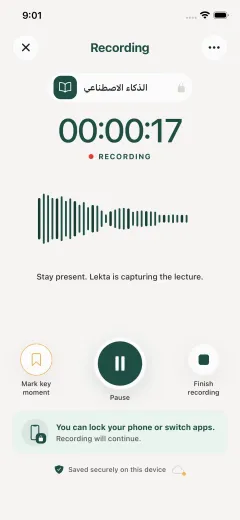
Lekta mobile recording screen with recording status visiblePermission
before capture

A permission-first checklist

Make the recording useful without treating consent as an afterthought.

This guide is general information, not legal advice. It cannot tell you whether a recording is lawful in your situation. Use your institution’s current policy and appropriate local guidance for that decision.

01

Ask the lecturer and check institutional rules

Find out whether your class, institution, course, or assessment has a recording policy. Obtain every permission required before recording or uploading audio. Lekta does not give you permission where permission is required.

02

Consider every voice and piece of course material

A lecture can include student questions, guest speakers, private discussion, copyrighted slides, or sensitive examples. Permission from one person may not cover everyone or every use.

03

Choose a stable recording position

Place your device where it can capture the lecturer clearly without blocking a view or distracting the room. Reduce handling noise and avoid moving the device during class.

04

Check the recording state

Confirm the right course, available device power, storage, and visible recording status before you rely on the capture. Recording quality and later AI output depend on the source conditions.

05

Keep use and sharing inside the allowed boundary

A recording allowed for personal study may not be allowed for group sharing, public posting, redistribution, or a different purpose. Keep the original permission and course rules in mind after class.

06

Recheck when the situation changes

A guest lecture, tutorial discussion, placement, lab, workplace, or online class can have different expectations. Ask again when the people, setting, material, or intended use changes.

Lekta’s boundary

You decide what to record or upload.

You are responsible for obtaining consent required from instructors, students, guests, institutions, employers, or other participants. The authoritative Lekta rules are in the Terms of Service and Privacy Policy.

  • Permission: follow the law and institutional rules that apply to the specific class.
  • Privacy: consider the other voices and personal information a recording may capture.
  • Content rights: use only material you have the right to record, upload, process, and review.

After the lecture

Keep the source protected and check the material it produces.

Use the recording for the purpose that was allowed

Do not assume permission for personal study also permits public sharing or reuse. If you are unsure, return to the lecturer, institution, and applicable guidance before changing how the recording is used.

Read the Privacy Policy

Review AI output against the source

Transcripts and generated study material can be incomplete or wrong. Check important information against the original lecture and official course material.

See the lecture-to-study path

Then prepare the study workflow

Record with permission. Keep the source. Review with care.

See how Lekta’s mobile workflow keeps a permitted lecture connected to its course. Public store listings are not yet verified, so the current next step is the launch list.